Table of contents
When cities grow, public transport networks must grow with them.
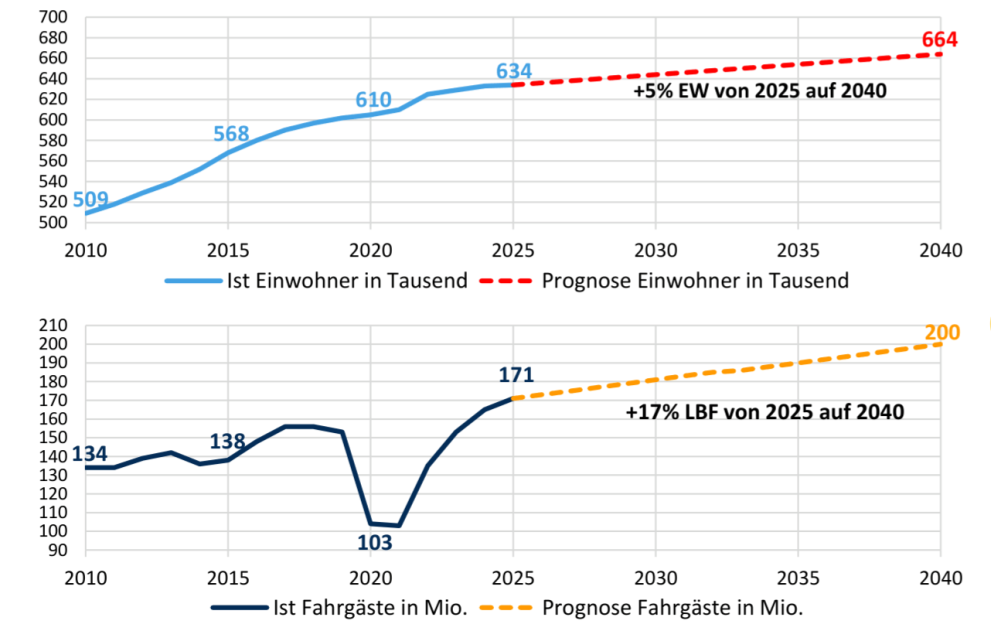
In Leipzig, Germany, the population is projected to increase by around 5% between 2025 and 2040. During the same period, public transport demand is expected to grow by approximately 17%. For planning teams, this creates a fundamental question: how can we continue developing attractive public transport networks while evaluating an increasing number of potential future scenarios?
For network planning teams, the challenge is no longer simply designing a network. It is assessing enough viable alternatives to make confident long-term decisions without proportionally increasing planning effort.
Traditionally, transit network design relies heavily on professional experience. Planners develop c0oncepts, test alternatives, review results, refine assumptions, and repeat the process. This approach remains valuable, but it can become increasingly resource intensive when planning for long-term growth and complex network changes.
At Leipziger Verkehrsbetriebe (LVB), Leipzig’s public transport operator, we wanted to explore whether automated transit network design could support planners in this process. Our goal was not to replace planning expertise. Instead, we wanted to understand whether automation could help us evaluate more options, more systematically, and in less time.
Beyond the First Network Option
Most planning teams can develop a good network concept. The bigger challenge is knowing whether enough alternatives have been explored to make a confident long-term decision.
In strategic transit network design projects, dozens of potential routes, service patterns, frequencies, and operational constraints must be considered simultaneously. As planners, we often face limitations in time, staff resources, and project schedules. This naturally restricts the number of alternatives that can be explored.
As a result, important planning questions emerge:
- Have we considered enough alternatives?
- Are we focusing investment on the right corridors?
- Could a different service structure attract more riders?
- Are our planning assumptions transparent and reproducible?
These questions motivated our exploration of automated network design within PTV Visum, with the goal of evaluating more alternatives in less time and with greater transparency.
From Manual Planning to Automation
One aspect of traditional planning can be described as “trial and error.” Experienced planners create alternatives, evaluate outcomes, and gradually improve the network concept.
The automated approach follows a different logic.
Instead of manually building every alternative, planners define objectives, constraints, and the framework within which the network should be developed. This includes:
- Transport demand.
- Available infrastructure.
- Service standards.
- Vehicle constraints.
- Budget limitations.
- Operational requirements such as turnaround times and termini.
Based on these inputs, potential network alternatives can be generated and evaluated automatically. In automated transit network design, the role of the planner shifts from manually creating every option to defining objectives, reviewing alternatives, and interpreting results.
This distinction is important. Automation does not eliminate planning expertise. It allows planning teams to evaluate more alternatives while applying their expertise where it creates the most value.
Testing the Approach in Leipzig
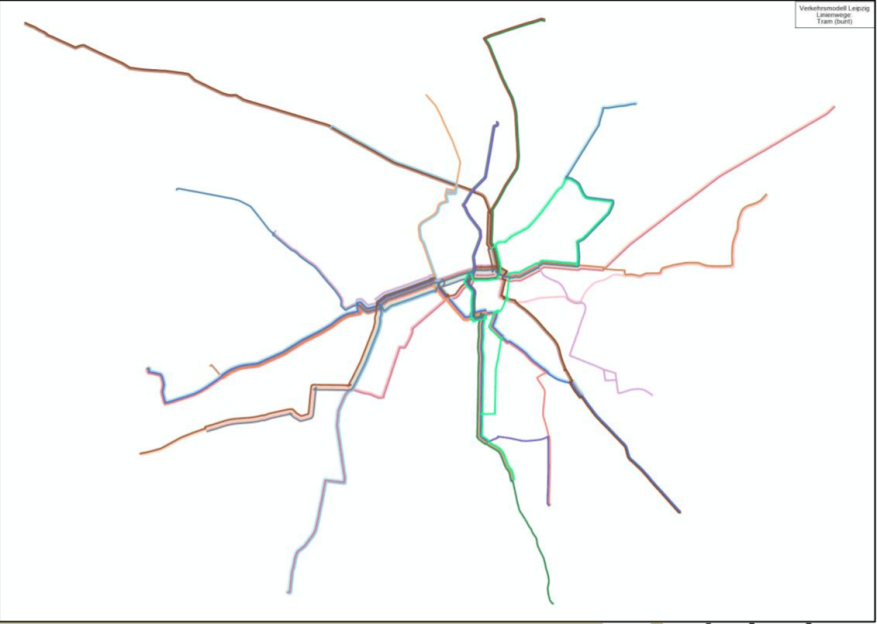
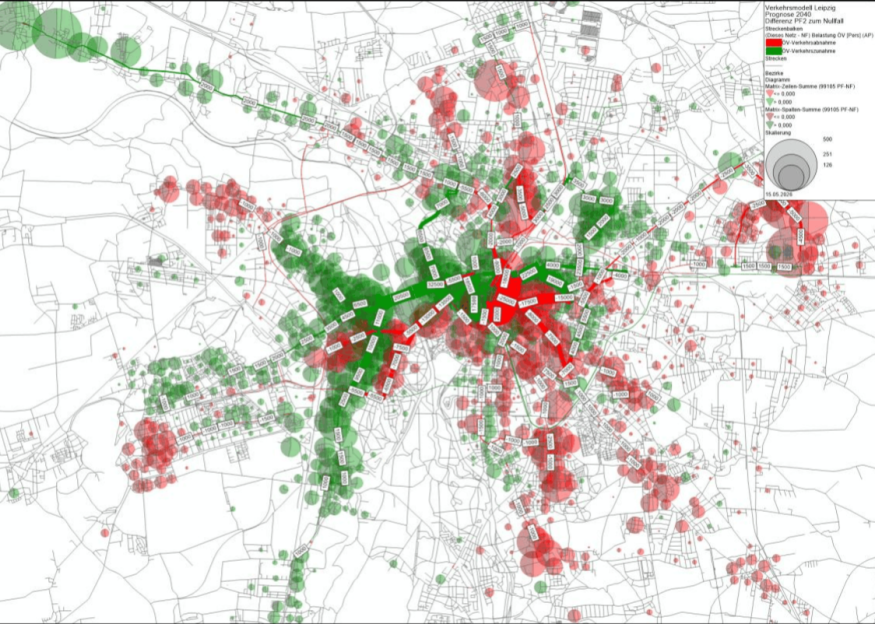
Our initial work focused on applying automated transit network design to future tram network scenarios for 2040.
Using projected demand and predefined operational constraints, we tested the automated construction of alternative tram networks and evaluated them within our existing transport modeling framework.
Rather than searching for a final 2040 network, we wanted to understand how automation could support planning teams in evaluating future alternatives more systematically.
Specifically, we wanted to understand:
- How realistic the generated networks would be.
- Which assumptions had the greatest influence on results.
- How automation could fit into existing planning workflows.
- Where additional development would be necessary.
This perspective is important because planning innovations are often judged too quickly based on a single result. In our case, the most valuable outcome was not a specific network proposal. It was a better understanding of how planning teams can use automation to evaluate alternatives and support long-term decision-making.
Four Lessons Learned
Data Quality Comes First
Data quality determines the value of any automated transit network design process. Demand forecasts, travel times, infrastructure coding, and operational inputs all influence the solution space. Poor inputs will inevitably lead to poor outputs. The planning process therefore starts with a robust modeling foundation.
Constraints Shape Outcomes
Constraints are just as important as the optimization itself. Vehicle availability, service standards, turning facilities, and operational rules all influence the alternatives generated. In practice, defining these constraints correctly is often as important as selecting the right planning objectives.
More Transparent Decisions
One of the most promising observations was the increase in transparency. When planners explicitly define objectives, assumptions, and constraints, it becomes easier to explain why alternatives were generated and how they were evaluated. This can improve communication within planning teams and support discussions with stakeholders.
Automation Supports Planners
The most important lesson is that automation supports planners, it does not replace them. The technology can generate alternatives rapidly and reduce the amount of manual iteration required. However, professional judgment remains essential when evaluating feasibility, understanding local conditions, and selecting preferred concepts. The value lies in combining computational efficiency with planning expertise.
Looking Ahead
Our experience suggests that automated transit network design could become a valuable addition to the planning toolbox, particularly for organizations responsible for long-term network development. Its greatest potential may lie in helping planning teams evaluate more alternatives with a structured and transparent approach.
As demand grows and planning questions become more complex, the ability to systematically assess a larger number of network options will become increasingly important. The greatest opportunity may not be finding a perfect solution. Instead, it may be giving planning teams a faster and more transparent way to explore possible solutions and identify promising directions.
For Leipzig, this work is still evolving. Additional research and testing are needed, particularly regarding objective functions, planning constraints, and integrated optimization across multiple modes. Yet the direction is promising.
For planning managers facing growing demand, constrained resources, and ambitious long-term goals, that may be the most important lesson of all: the future of transit network design is not about replacing planners. It is about enabling them to evaluate more alternatives, make better-informed decisions, and plan with greater confidence.

Plan Future-Ready Public Transport Networks
Explore how PTV Visum helps planners test scenarios, evaluate network alternatives, and support long-term service development
Get a free PTV Visum demo
Related Posts