Table of contents
Historic town traffic management demands evidence based on behaviour, not assumptions.
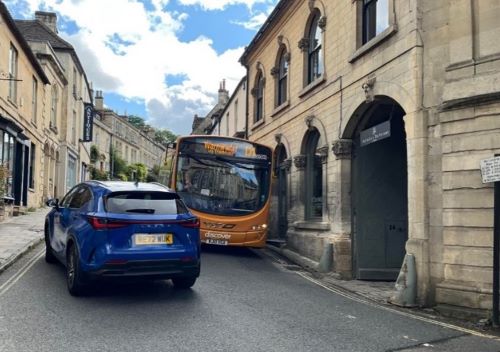
If you stand at the top of Silver Street in Bradford-on-Avon at the wrong time of day, you don’t need counts to feel that the network is working beyond what its medieval geometry was built for: Footways narrow exactly where pedestrian flows peak. cyclists share tight lanes with motor traffic. Drivers inch through pinch points with almost no margin for error.
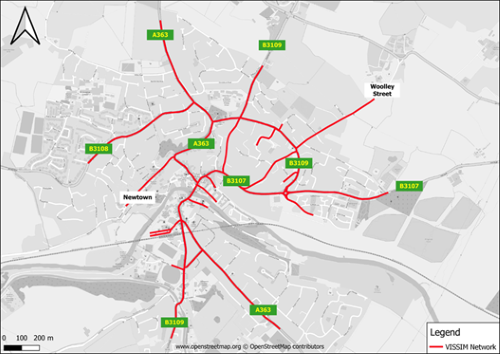
In a place like this, static sketches and averages miss the interactions that decide safety and flow. That’s why we turned to behaviour‑level microsimulation in PTV Vissim. The microsimulation reproduces the movement patterns of all road users on a microscopic scale and enables scenario‑based evaluation before implementation.
Bradford-on-Avon is a historic market town in west Wiltshire, south-west England. Despite modest population, its street pattern and heritage constraints create mobility pressures more typical of far larger towns.
In 2021, the Town Council consulted residents on the “Future of Transport.” Three priorities dominated: pedestrian and cyclist safety, traffic volumes, and air quality. Our goal was to develop long‑term options aligned with these concerns.
Why Use a Behaviour‑Level Model
Space constraints shape every design decision. Bradford-on-Avon offers almost no room for dedicated cycling infrastructure. Footways narrow at busy segments. Several pinch points cannot be widened without heritage impacts. The single river crossing concentrates pressure across the network.
To understand the consequences, we needed behaviour‑level microsimulation. PTV Vissim models individual road users and their interactions. It shows how drivers adjust speeds, seek gaps, or yield at narrow sections. It captures multimodal effects that spreadsheets cannot show.
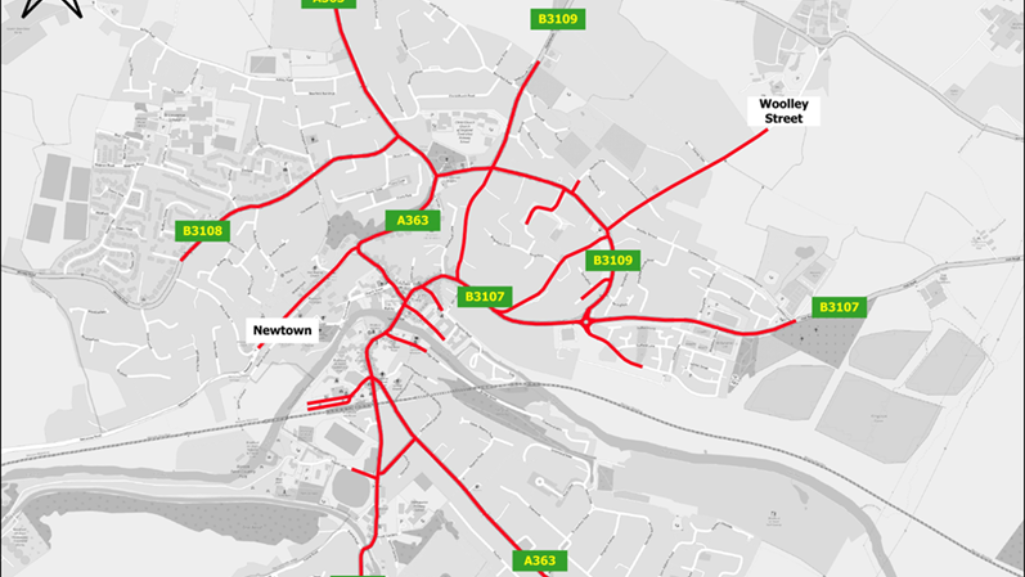
We built a 2023 base model using count data, journey times, bus routes, and crossing surveys. After validation, we generated year 2041 scenarios to ensure long‑term resilience. Vissim’s scenario tools helped us compare options quickly and explain effects with clear visuals.
Testing Options
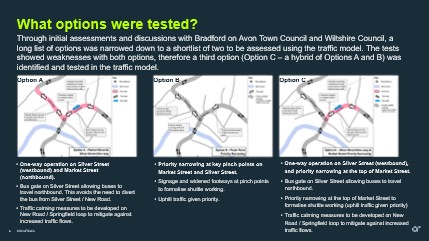
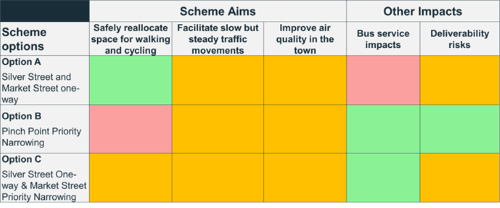
We assessed Option A and Option B, then created Option C as a hybrid.
Option A used a one‑way westbound operation on Silver Street and northbound on Market Street. A bus gate preserved direct bus access. Priority narrowings managed shuttle working, giving uphill traffic precedence. This improved eastbound movement on Mount Pleasant and reduced congestion on Market Street and Silver Street.
Option B also relied on priority narrowings and directional changes. It improved northbound flow but increased southbound congestion near Masons Lane and Bath Road. The model showed that the new pressure outweighed gains in other areas.
Option C blended the best parts of both. It avoided major congestion in any direction and produced stable average speeds. Mount Pleasant saw small gains, while Silver Street became more predictable westbound due to its simplified one‑way pattern.
Environmental Findings
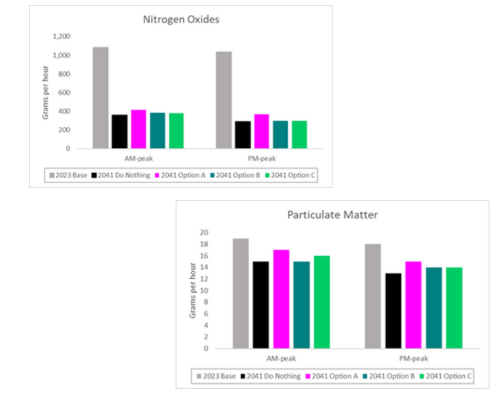
Traffic and air quality are interconnected. We integrated emissions calculation into the microsimulation workflow. By evaluating vehicle movements within Vissim, we estimated NOx, PM, and CO₂ impacts for each scheme.
All options showed slight increases compared with the 2041 do‑nothing scenario due to traffic redistribution. However, each remained far below 2023 levels because future fleets are expected to be cleaner.
The important insight was that distribution matters. When overall emissions drop, where emissions occur becomes more important than how much occurs.
This guided discussions about protecting sensitive locations and avoiding unintended shifts toward narrow heritage corridors.
When Evidence Meets Emotion
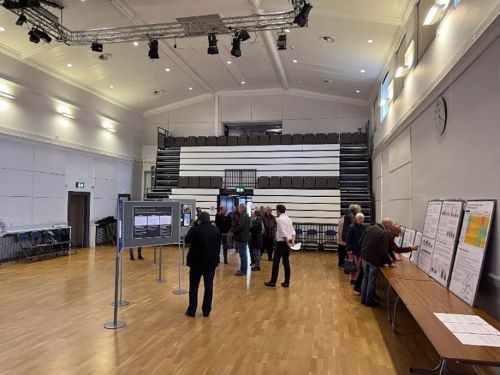
We supported two public consultation events in March 2024. About 400 residents attended across two sessions. Opinions were mixed and often strong. This is common in historic settings, where changes to streets feel personal.
The Vissim animations helped residents understand how each option would behave. They could see how queues formed, how priority narrowings operated, and how pedestrians moved through crossings.
The animation shifted the conversation from speculation to informed debate. People could compare the implications of their preferences rather than rely on assumptions.
Lessons for Mobility Planners
The Bradford‑on‑Avon study provides several lessons for planners working in constrained locations:
- Geometry dictates outcomes. When space is tight, behaviour matters. Microsimulation reveals how road users make decisions in pinch points and narrow corridors.
- Hybrid designs often offer the most balanced performance. Option C succeeded because we understood where Options A and B worked and where they fell short.
- Future conditions matter. Designing for 2023 is not enough. Testing 2041 demand prevented us from recommending options that would fail later.
- Air‑quality baselines evolve. With cleaner fleets, the location of emissions becomes more important than the volume.
- Engagement benefits from clear visuals. Simulation creates a shared language that helps communities understand trade‑offs.
- Multimodal modelling is essential. Pedestrians, cyclists, buses, and cars interact constantly. A simulation that models them together captures effects that siloed approaches miss.
Conclusion
Historic towns require solutions rooted in realistic behaviour and honest constraints. Bradford-on-Avon demonstrated that traffic management is not about finding a perfect option. It is about understanding how people move, anticipating future pressures, and communicating decisions clearly.
PTV Vissim provided the behavioural insight, transparency, and flexibility required to build a long‑term, credible approach for the town.
About PTV Vissim
PTV Vissim is a multimodal microscopic simulation platform that models the behaviour of all road users. It supports emissions analysis, scenario testing, and realistic visualisation, helping planners evaluate the impacts of decisions before implementation.

See PTV Vissim
in Action
Explore how behaviour‑level microsimulation helps you test options, quantify impacts, and engage stakeholders before you build
See PTV Vissim in Action
Explore how behaviour‑level microsimulation helps you test options, quantify impacts,
and engage stakeholders before you build
Related Posts