Table of contents
University towns face a unique transportation challenge: moving thousands of students efficiently across campuses and residential areas. In Leeds, where over 80,000 full-time students make up 10% of the population, only 13% commute by bus. With many students opting to travel by car, this adds to the city’s congestion and emissions and undermines sustainability goals.
The issue isn’t demand – it’s design. Leeds’ bus network relies on a radial structure centered on the city, forcing transfers and creating inefficiencies. Many students face long travel times, multiple transfers, and poor coverage for campuses like Leeds Trinity University. These barriers discourage bus use and increase reliance on private cars.
My research set out to answer a critical question: How can we redesign the network to make buses the preferred choice for students? Using PTV Lines, I explored corridor-based planning and compared three improvement scenarios to identify the most effective solution.
The Challenge: Inefficient Bus Lines for Students
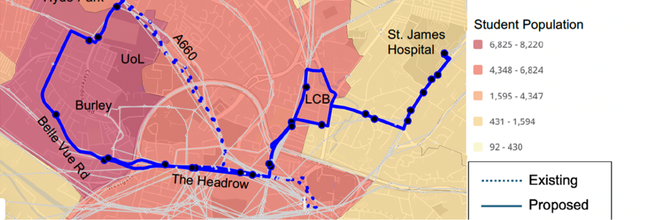
Students travel differently from commuters. Their trips are spread across the day, with peaks around lectures and off-peak movements for leisure and study. Yet Leeds’ network struggles with overlapping routes, inconsistent headways, and poor coverage for campuses like LTU Main.
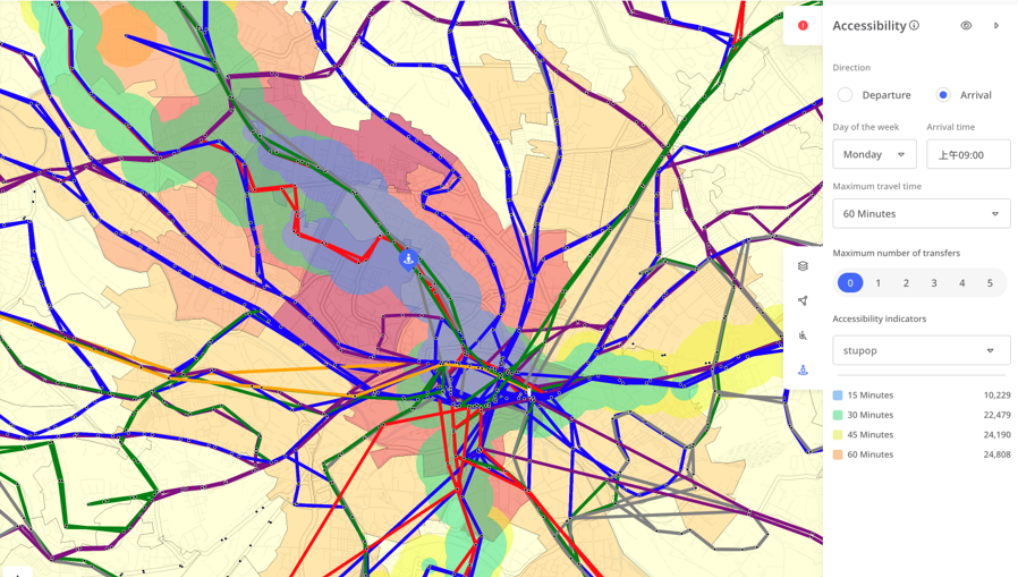
Using PTV Lines, an accessibility analysis revealed that only 35% of students could reach campus within 30 minutes without transfers, increasing to 50% with one transfer. Ridership data showed underutilised routes alongside overcrowded corridors, signaling inefficiencies in resource allocation. For example, Routes 22 and 25 had a PKM/SKM (passenger kilometres divided by service kilometres) ratio below 1, while Headingley corridor routes were heavily used with a much higher PKM/SKM rate.
These findings highlight a structural problem: the network prioritises coverage without optimising frequency or connectivity. For students, reliability and simplicity matter more than overall volume of routes.

The Solution: Corridor-Based Planning with PTV Lines
The Solution: Corridor-Based Planning with PTV Lines
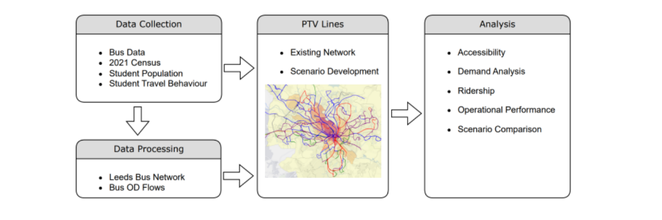
Using PTV Lines, a simple-to-use public transport planning software, I modeled three improvement scenarios:
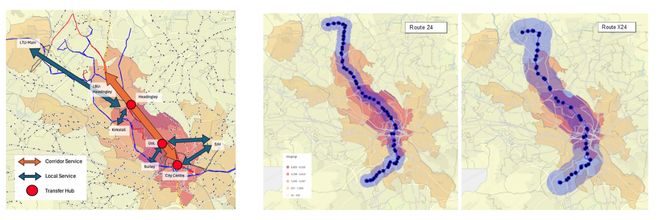
- Scenario 1 – Corridor Enhancement: Consolidate services along the A660 corridor, introduce express routes, and adopt a hub-and-spoke model.
- Scenario 2 – Coverage Expansion: Extend routes to underserved areas like Burley and St. James Hospital.
- Scenario 3 – Non-Public Interventions: Expand university-operated shuttles and partnerships with private operators.
Corridor-based planning (Scenario 1) emerged as the most effective. By upgrading Route 24 to an express service (X24) and simplifying local routes, we reduced journey times by 21%, doubled the number of students served, and improved operational efficiency. This approach aligns with international best practices: consolidate overlapping routes, increase stop spacing, and focus resources on high-demand corridors.
Results: Improved Accessibility & Efficiency
Scenario 1 delivered the strongest gains:
- Accessibility: +13.3% in morning arrivals and +15.5% in afternoon departures.
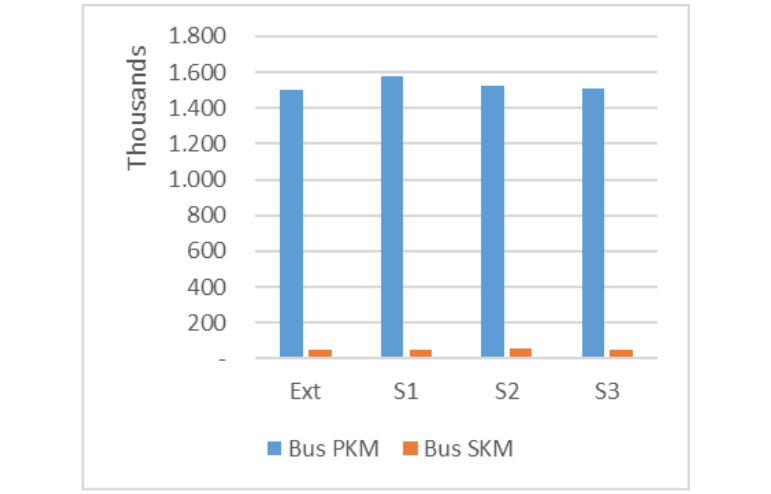
- Ridership: Increased to 1.58 million passenger-kilometres, with the highest PKM/SKM ratio (29.2).
- Cost Efficiency: Annual operating cost reduced by £530,000 compared to existing services.
Scenario 2 improved equity but compromised efficiency, while Scenario 3 boosted coverage for 38% of students but faced high costs and operational complexity. For instance, expanding the LBU shuttle required doubling vehicles and raised annual costs by 296%, despite serving more students.
| Campus | Scenario 1 | Scenario 2 | Scenario 3 | |||
| No. of Transfers | 0 | 1 | 0 | 1 | 0 | 1 |
| UoL-Main | +13.0% | +8.8% | +3.9% | -4.5% | +12.9% | +5.4% |
| LUBS | +13.6% | +11.6% | +7.8% | +7.4% | +7.6% | +4.3% |
| SJH | +1.5% | +7.5% | +6.2% | +10.8% | +7.0% | +10.9% |
| LBU-City | +13.9% | +5.1% | +1.2% | -0.3% | +13.3% | +4.8% |
| LBU-Headingley | +18.9% | +17.2% | +10.3% | +21.9% | +16.0% | +26.4% |
| LTU-City | +13.0% | +7.2% | -1.5% | +0.5% | +2.0% | +3.3% |
| LTU-Main | -0.2% | +11.1% | +6.7% | +12.5% | +5.7% | +9.0% |
| LAU | +8.6% | +2.4% | -0.2% | -4.4% | +9.3% | +1.4% |
| LC | +7.0% | +8.2% | +0.1% | +1.3% | +9.2% | +5.7% |
| LCB | +30.5% | +23.4% | +15.4% | +22.2% | +12.5% | +9.1% |
Scenario Comparison: Why Corridor-Based Planning Wins
Scenario 1 aligns with network planning principles: simplicity, frequency, and connectivity. It strengthens the A660 corridor, improves indirect access to campuses via feeder routes, and leverages network effects to attract riders. Scenario 2, while equity-focused, weakened corridor service and delivered modest accessibility gains. Scenario 3 offered targeted improvements but required high operational costs and complex coordination. The takeaway? A hybrid approach works best – corridor-based planning as the backbone, complemented by selective shuttle services for underserved areas.
Lessons for Transportation Planners Worldwide
This study highlights principles that apply beyond Leeds:
- Scalability: Corridor-based planning works for commuter corridors and regional networks.
- Data-driven decisions: Use demand data to allocate resources effectively.
- Cost-efficiency: Consolidating routes reduces duplication and optimises fleet use.
For broader impact, integrate PTV Lines with:
- PTV Visum for strategic planning and demand forecasting.
- PTV Vissim for simulating operational performance and passenger experience.
These tools together enable planners to move from conceptual design to operational reality, ensuring networks are both efficient and user-centered.
Why This Matters for Transit Authorities
Corridor-based planning, supported by PTV Lines, offers a practical solution to one of the most pressing challenges in university towns: providing efficient, accessible transport for large student populations. By combining high-frequency corridor services with targeted shuttle interventions, planners can deliver networks that are sustainable, equitable, and ready for future integration.
The Leeds case demonstrates that network redesign is not just about routes – it’s about strategy. When planners embrace data-driven tools and hybrid solutions, they can achieve measurable improvements in accessibility, ridership, and cost efficiency, paving the way for greener, smarter mobility systems worldwide.

Try PTV Lines for free
PTV Lines makes the planning and optimization of bus and rail networks simple and efficient.
Public Transport Planning – from analysis to implementation
Our ultimate guide for transit planners